
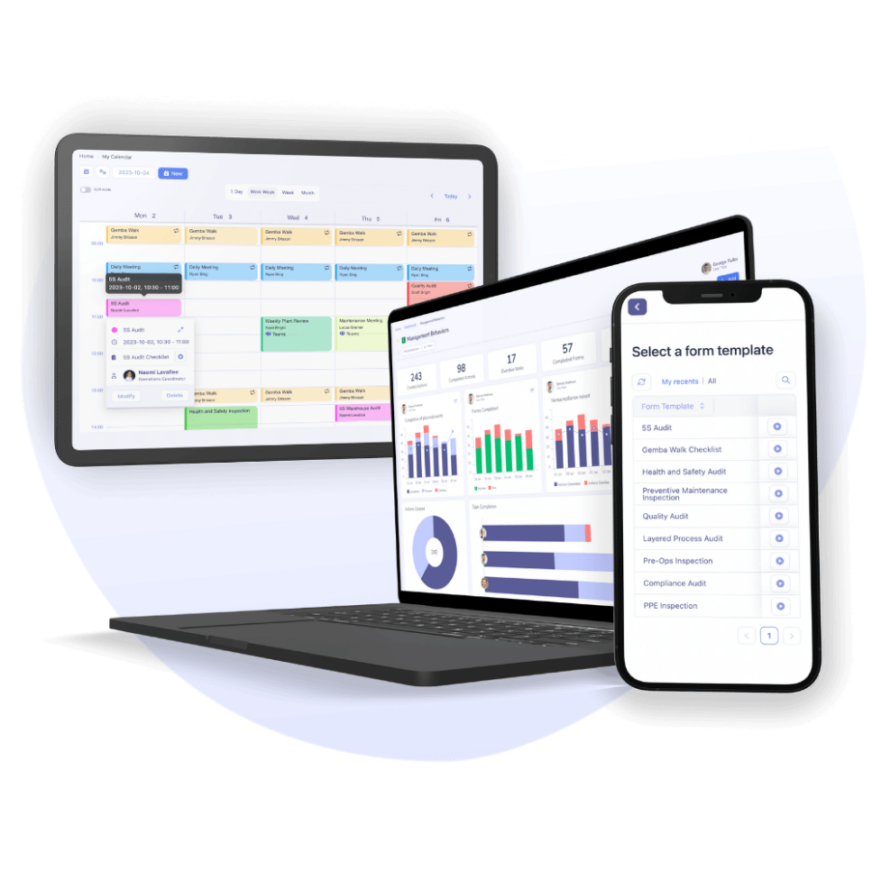


















- They display key metrics, action items, and performance targets to support daily team meetings and continuous improvement.
- MDI boards promote real-time visibility, accountability, and collaboration across frontline teams.
- Often integrated into a broader Daily Management System (DMS), they help identify issues early and maintain alignment with strategic objectives.
Manufacturing is undergoing a major transformation. Factories have to do more with less, optimizing every aspect of the manufacturing process. As a result, the industry is increasingly turning towards just-in-time (JIT) production models to reduce costs and meet economic and environmental sustainability goals.
To meet these demands and drive continuous improvement, enterprises must adopt a blend of proven management models and new technologies. That’s where MDI boards come in.
MDI Meaning and Definition: Managing for Daily Improvement
What does MDI stand for?
The acronym stands for Managing for Daily Improvement.
What Is an MDI Board?
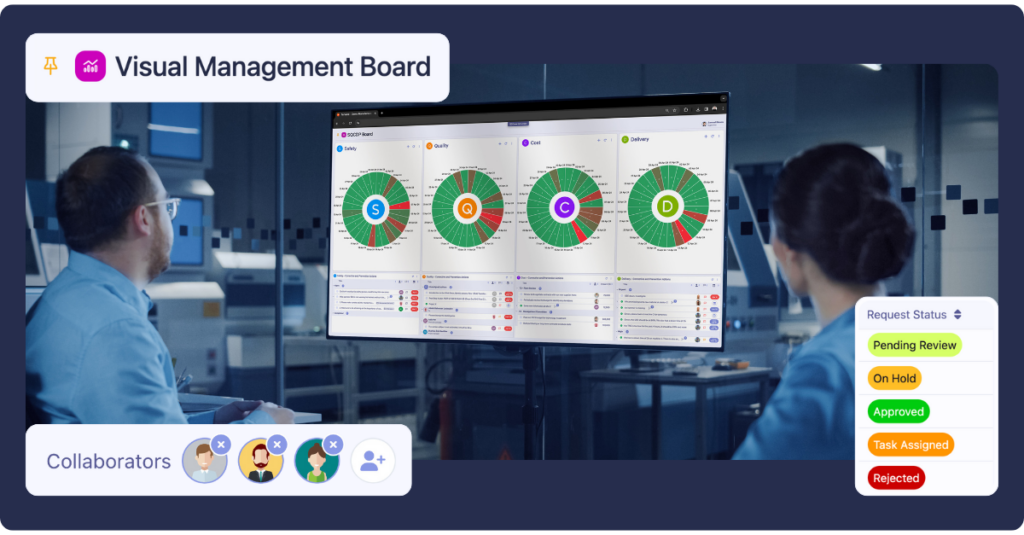
An MDI board (Managing for Daily Improvement board) is a visual management tool used on the shop floor to align team activities with strategic objectives. It serves as a focal point for daily huddles, helping operators, supervisors, and managers:
- Monitor key performance indicators (KPIs)
- Track progress toward team and plant-level goals
- Identify and respond to problems in real time
- Foster continuous improvement through team accountability
Rather than being a standalone solution, an MDI board is one component of a broader Daily Management System (DMS). It makes performance data accessible and actionable by combining visual indicators (charts, metrics, color coding) with structured routines (daily meetings, action follow-ups).
A Lean Board for Daily Control
MDI boards help teams track lean visual management and continuous improvement processes by providing key information and holding employees accountable for their responsibilities. They play an important role in daily team meetings too, by displaying key metrics and listing daily action items.
This helps teams achieve a state of flow, whereby they’re aligned with top-level business goals and able to make real-time adjustments to proactively address challenges across their organizations.
An MDI board typically includes the following components:
- Daily metrics, such as common manufacturing KPIs like production rates, downtime, and quality control metrics
- Action items highlighting tasks team members need to carry out to meet performance targets
- Team goals display those performance targets, giving team members tangible goals to work toward
MDI boards use visual elements, such as graphs, progress bars, and color-coded indicators to convey information quickly and accessibly.
Industry leaders leverage Tervene to standardize their operations


Why MDI Boards Matter in Manufacturing Organizations
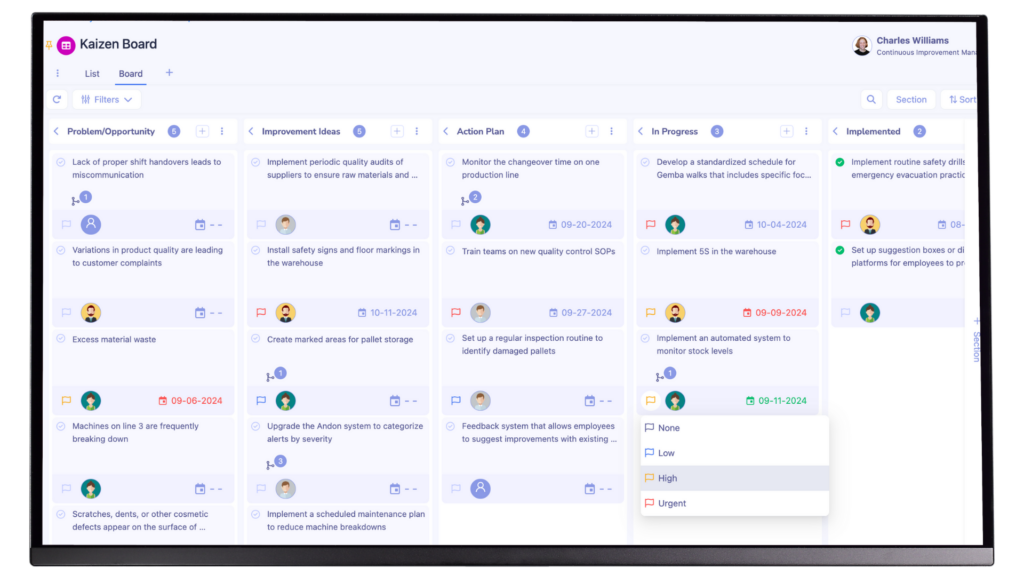
Much like Kaizen, MDI boards support continuous improvement, albeit in a way that focuses on solving problems minute-by-minute with constant input and involvement from the team. By providing visibility into production line performance and the overall manufacturing process, they help teams quickly identify problems before they become barriers to optimal production workflows.
For example, an industrial machinery plant may track daily downtime, maintenance schedules, quality control processes, delivery schedules, and other critical aspects of the manufacturing process. By representing this information in a readily accessible visual format, team members can easily review their progress towards goals that are relevant to them and make necessary adjustments without having to refer to line managers for insight.
MDI Boards vs. Daily Management Systems
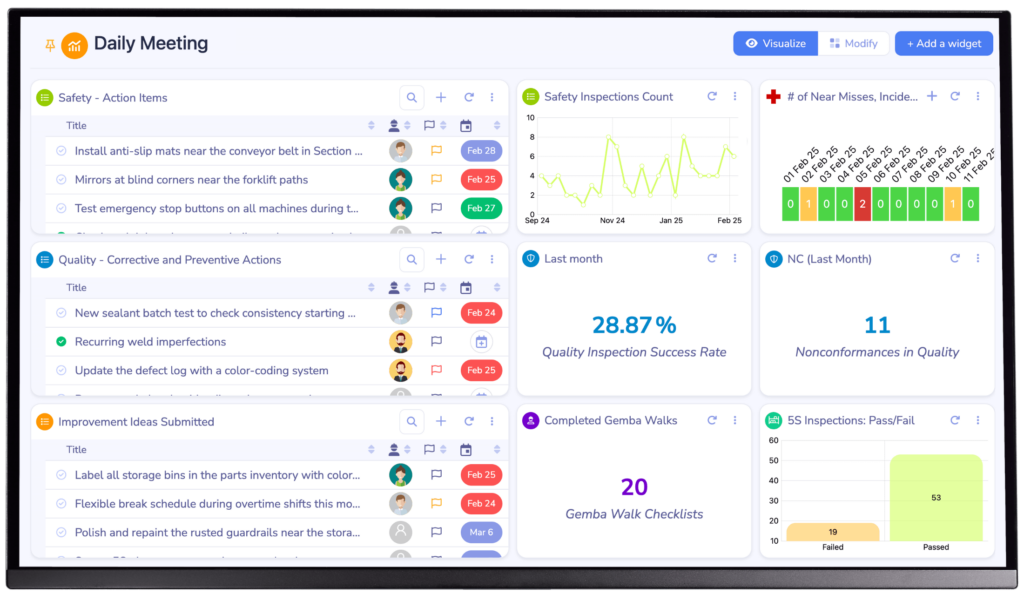
Both MDI boards and daily management systems (DMS) serve to improve routine operations. However, they’re not quite the same thing. Rather, an MDI board is a specific method or tool used within the broader DMS framework. DMS itself centers on establishing standardized daily routines to ensure consistent performance and continuous improvement. MDI is simply a way of tracking progress towards those goals.
MDI Board Examples and Benefits
Here’s a quick breakdown of the benefits of MDI boards and other visual management boards in manufacturing:
- Improved visibility with visual representations – such as SQCDP charts, tables, and progress bars – of important metrics that all team members can understand
- Better collaboration by supporting open communication in daily team meetings and encouraging employees to share their insights on how to improve operations
- Proactive problem-solving by highlighting potential issues like production delays and maintenance issues, thus leading to faster response times
- Increased engagement by making it easier for employees to get involved in reviewing key metrics in a way that’s intuitive and accessible
- Business alignment by focusing on the key metrics, carefully chosen by management teams, to work more effectively towards goals
Gain visibility into operations and track key metrics with Tervene’s tools


How to Incorporate MDI Boards in Your Production Processes

10 Visual Management Must-Haves [eBook]
It’s important to remember that MDI boards are ultimately just a tool. And, like all tools, their adoption must be strategic and integrated with the broader business culture of continuous improvement.
With that in mind, here are the fundamental steps to take to get started:
- Know your goals: The first step is for management teams to get together and go over their organization’s strategic objectives. These then need to be broken down into team-specific goals and metrics, such as production throughput, quality control metrics, and equipment downtime.
- Keep things simple: A lack of data is rarely an issue and, in fact, you can easily end up making things more complicated than they need to be by including too much data. Stick only to what’s relevant and important, and integrate those data sources into your processes.
- Involve your workers: Your line managers and their subordinates will be the primary users of your MDI boards, so it’s only logical to involve them in their implementation. Ensure you provide targeted training so that individual team members understand the metrics and why they’re relevant in their roles.
- Review and adjust: Remember that continuous improvement isn’t an endpoint, but an ongoing process. That means regularly reviewing and refining your progress, changing your KPIs and action items and how they’re displayed where necessary. Adjustments ensure that you’re always supporting individual team needs and goals.
If you’re looking to drive a culture of continuous improvement, MDI boards offer a great way to enhance communication, improve visibility into performance, and enable proactive problem solving.
Digital MDI tools and solutions
Tervene helps manufacturers achieve operational control with digital visual management solutions.

Gain visibility with Tervene’s visual management tools
Explore Tervene’s visual management toolsFAQ: MDI boards
MDI stands for Managing for Daily Improvement. It’s a lean management approach that emphasizes structured daily routines, real-time performance tracking, and team-driven problem-solving.
An MDI board is a visual management tool used on the shop floor to display key performance indicators (KPIs), team goals, and action items. It helps teams align their daily work with broader operational objectives.
An MDI board is one tool within a DMS. While a DMS refers to the entire system of standardized routines and performance monitoring, the MDI board is a visual component used to facilitate those routines and track progress.
Typical components include daily production metrics, downtime, quality issues, safety incidents, open action items, and team-level goals. Visuals like graphs, progress bars, and color-coded indicators make the data easy to interpret.
Operators, supervisors, team leaders, and frontline managers use MDI boards during daily huddles to review performance, discuss issues, and ensure alignment with plant-wide goals.
Yes. Many organizations use digital MDI boards to centralize data, automate updates, and facilitate remote visibility—especially in multi-site or hybrid environments.