












Production ran at Welded Tube’s U.S. facility. Customers got their tubing. Plant Manager Steve Vanaskie couldn’t see, on any given morning, which issues from the day before were still open, what the outgoing shift had learned, or whether two supervisors ran the same check the same way.
Gaps like that surface when the same problem comes back a third time, or when an experienced operator leaves and takes the fix with him.
About Welded Tube
Founded in 1970 and headquartered in Ontario, Canada, Welded Tube produces steel tubular products across five manufacturing and finishing facilities in North America. It runs three divisions: Energy Tubulars, ERW (electric resistance welded) Mechanical, and HSS (hollow structural sections). The company is a member of the Canadian Steel Producers Association (CSPA).
This story covers the U.S. facility, the company’s only plant in the United States, run by Plant Manager Steve Vanaskie. The site has used Tervene since 2022.
What the plant set out to fix
The site carried operational drag that never triggered an alarm: issues nobody logged, knowledge that didn’t survive a shift change, and leadership routines that varied by supervisor from the floor to the plant office. Left alone, those compound.
Lost actions from meetings that never got followed up on and no accountability for those to-do items. We needed a standardized way to manage our daily operations and capture all the things we need to do to improve and operate.
– Steve Vanaskie, Plant Manager, Welded Tube USA
Three objectives went into the project:
- Standardize management routines and communication.
- Get real-time visibility into operations and key performance indicators (KPIs).
- Resolve problems faster, with clear ownership.
What they run in Tervene
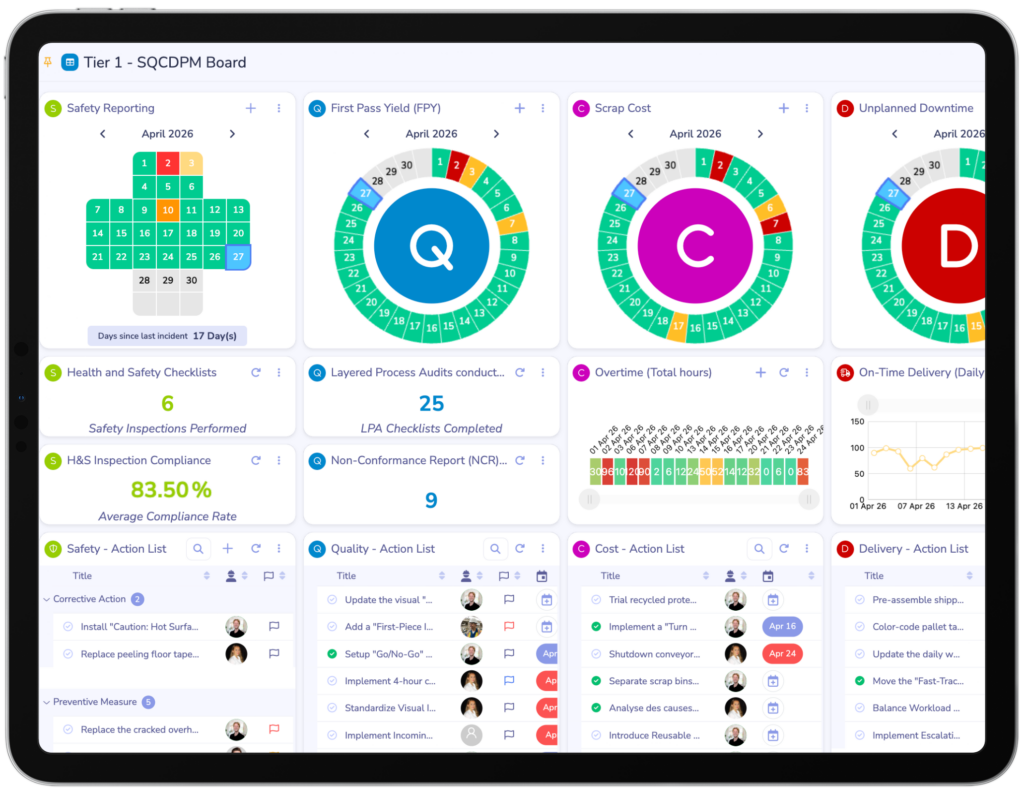
One dashboard, two kinds of daily meetings
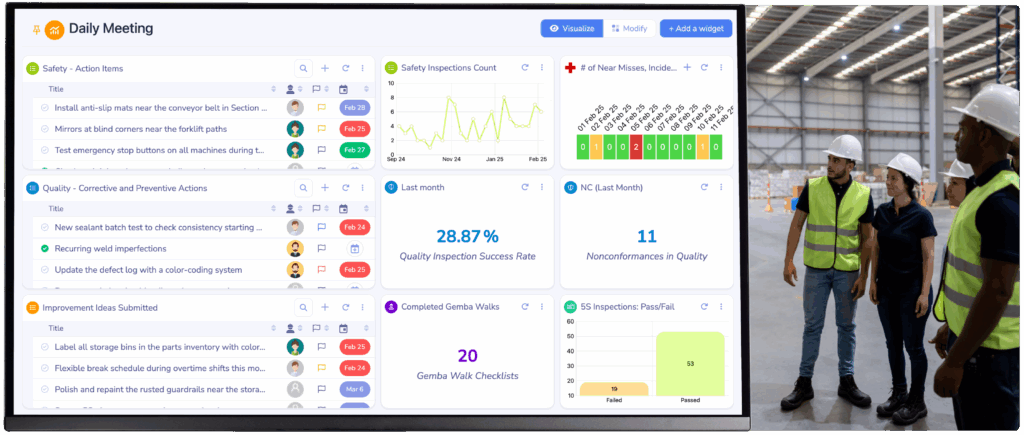
The day starts with the daily operations meeting. A few days a week, it runs in a conference room with colleagues in Canada on the line. The other two days it runs out on the floor, so the people working the production line take part. Both versions use the same dashboard.
Five processes run through those meetings:
- Maintenance planning. The maintenance planner reorders actions on the meeting agenda each week and builds the shutdown plan.
- Continuous improvement. The engineering manager owns it. Ideas land in a separate space, and once they’re approved and prioritized, they move into the weekly engineering meeting as projects with sub-actions.
- Safety performance. Daily tracking, plus all accident and near-miss reporting. That’s where the trend data comes from.
- Quality. The department runs its own dashboard, including completion and actions generated from Layered Process Audits (LPAs).
- Changeover improvement. A weekly meeting works through new, upcoming, late, and completed actions from the changeover audits.
Audits, checklists, and where the findings go
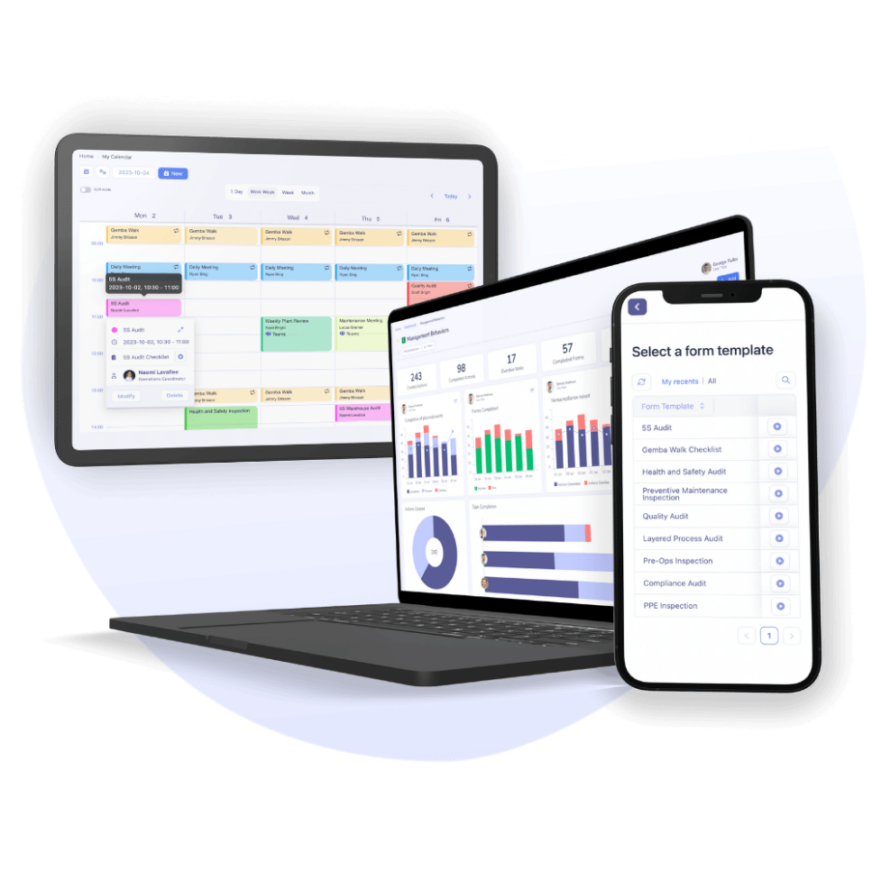
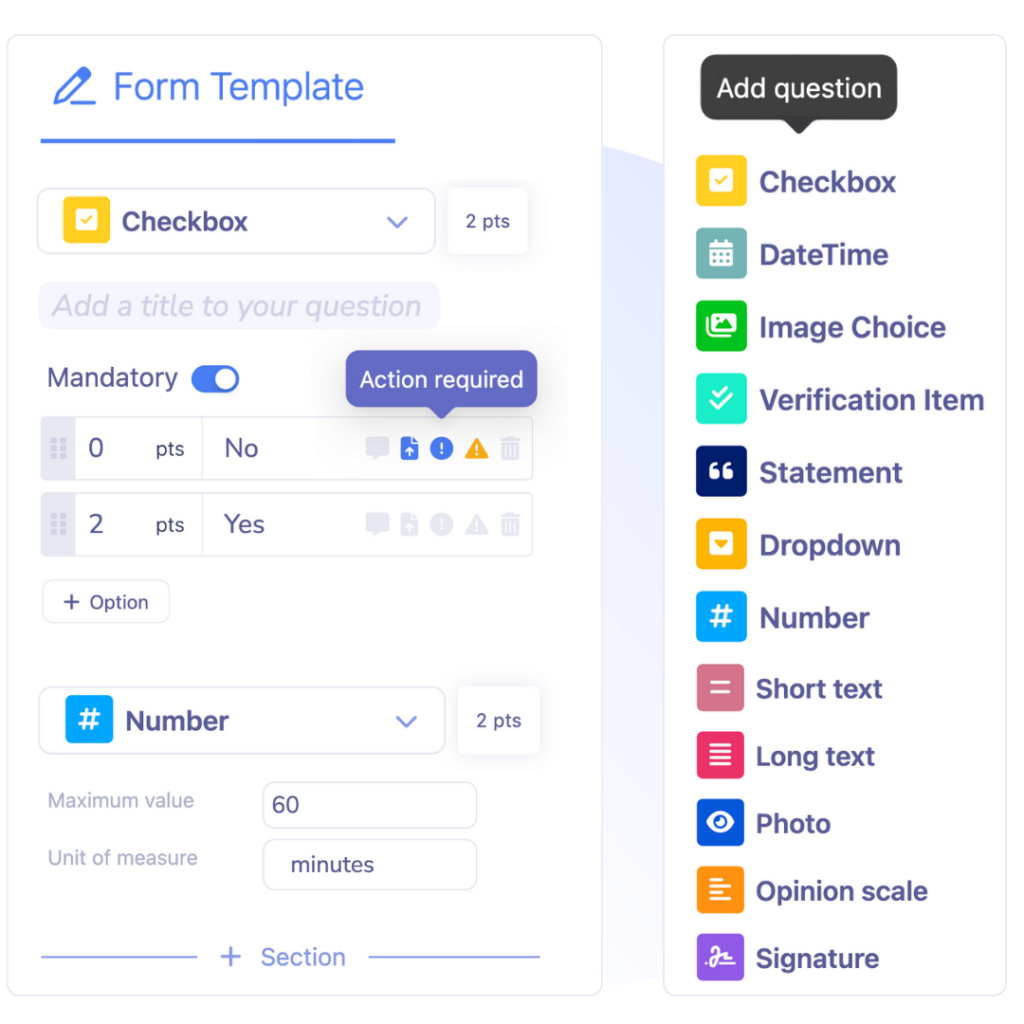
Setup audits run every shift, checking the line against the specification it should be running to. So do personal protective equipment (PPE) audits. Alongside them: LPAs, 5S audits, changeover audits, daily Gemba walks, accident investigations, and the maintenance technicians’ daily rounds.
Those rounds capture process data. Each one records the operator, the shift, readings such as coolant concentration, anything needing follow-up, and the work completed that day. Supervisors review them.
What keeps the system running is what happens to a finding. An issue raised during an audit becomes an action with an owner and a due date, and completion is tracked. Actions a supervisor raises populate the shift handover space automatically, so the next shift starts from what the last one found. Nothing depends on someone remembering to pass it along.
Leader Standard Work (LSW) was never set up as a formal program at the site. It arrived through the routines themselves.
LSW, although not formalized, is now ingrained. Our supervisors do the same checks and audits everyday, our managers are part of a layered process audit program, and we are capturing issues before they become problems.
– Steve Vanaskie, Plant Manager, Welded Tube USA
The Knowledge Base
The team built a space they call the Knowledge Base. It does three jobs.
- Troubleshooting. A fix that worked gets written up and stays searchable, so the next person facing the same fault doesn’t start from scratch.
- One Point Lessons (OPLs). A new alarm or a new piece of equipment triggers a one-page instruction for operators. It goes to each supervisor; operators sign a hard copy, and the supervisor closes the action once everyone has.
- Work instructions. Updates to work instructions and control documents are recorded as they’re made, so people find the current standard.
We assign that to each supervisor to have their folks go over that. They have to sign a hard copy of it and then once that’s complete, they complete the action. So we know that everybody is signed off on it.
– Steve Vanaskie, Plant Manager, Welded Tube USA
Each of the three captures what the plant learns when it learns it. Keeping that in one place means it’s still there when someone needs it, next shift or next year.
Issues that occur multiple times can be tracked and updated with comments, and do not require face-to-face interaction to pass info.
– John Kuhn, Engineering Manager, Welded Tube USA
Where the site stands today
The site now runs its daily management of safety, continuous improvement, maintenance, and quality in Tervene. Every month, Welded Tube completes hundreds of digital checklists and closes out thousands of actions.
How PPE audits changed hand injuries
Hand injuries were the site’s biggest safety concern, and PPE compliance was the root cause. The team built a PPE audit that runs every shift and made completed audits a leading KPI.
Hand injuries were our biggest safety concern, and the root cause was a lack of compliance with our PPE rules. To change behavior, we created a PPE Audit conducted every shift and set a leading KPI to track how many audits we completed. This has nearly eliminated hand injuries, as now people know leaders are checking.
– Steve Vanaskie, Plant Manager, Welded Tube USA
Where the site goes from here
The system is in place and running daily. Steve is now working on how the meetings use it.
One area we need to work on is to focus our meetings more on the actions and less on the metrics.
– Steve Vanaskie, Plant Manager, Welded Tube USA
Deploy the same standard at your sites
Welded Tube’s U.S. plant built its daily management system one routine at a time. Meetings first, then audits, then the Knowledge Base behind both. Each piece holds because it runs the same way every day, on every shift, no matter who is in charge.
It is a great tool to help teams standardize their operations and drive disciplined execution.
– Steve Vanaskie, Plant Manager, Welded Tube USA
Book a demo to see how Tervene can standardize daily management and scale Operational Excellence across your sites.


